Remnant

role

UI/UX & Narrative Design, Gameplay Programming

timeline

Apr - Jun 2026

context

CS247G, Stanford

key skills

  • MVP Scoping
  • Usability Testing
  • Interaction Design
  • Accessibility Design

overview

Remnant is a point-and-click horror game where players return to a fictional island town to lift the curses afflicting three friends, uncovering the colonial history behind each curse along the way. On a three-person team, I led UI/UX and narrative design and programmed gameplay in Ren'Py, taking the game from concept to a complete, playable MVP in a four-week build.

problem

Most strategy and simulation games about colonialism reward players for settling and conquering new land, and few ask players to examine the harm it caused. We saw a gap for a narrative game that shows how colonial history still shapes the present, using horror and mystery to make that history feel personal and asking players to slow down and pay attention.
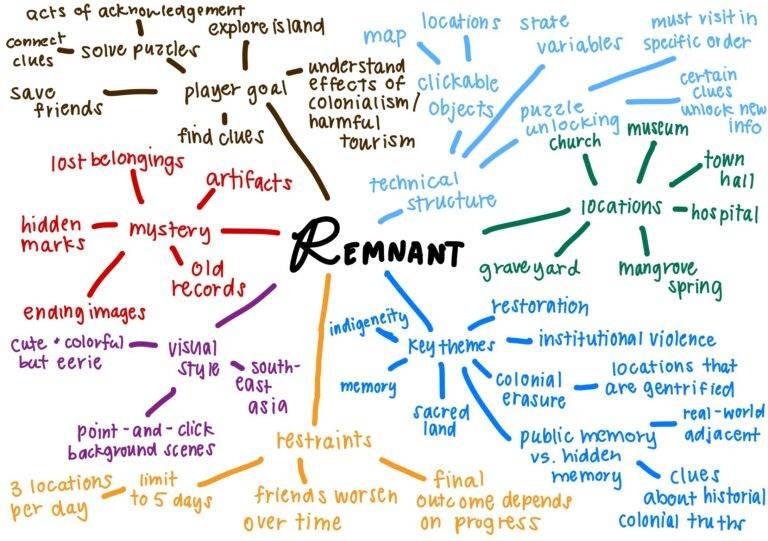
Hand-drawn mind map of Remnant branching into player goal, mystery, visual style, restraints, key themes, locations, and technical structure
Our team's initial mind map, used to scope Remnant's player goals, key themes, locations, visual style, and constraints before we started building.

target users

We designed for players who enjoy narrative games, puzzles, and mysteries, including people with little background in colonial history or point-and-click games. To make the game easy to learn without prior context, every location follows the same loop: explore, collect clues, and use them to solve a puzzle.

pain points

Across 10 playtests, most frustration came from the interface rather than the puzzles themselves. Players needed outside help to understand the core ledger puzzle, missed items they had picked up because the pickup was buried in dense dialogue, couldn't tell when a clue pointed to another location, and sometimes clicked leave by mistake, losing one of their limited daily visits with no way to undo it.
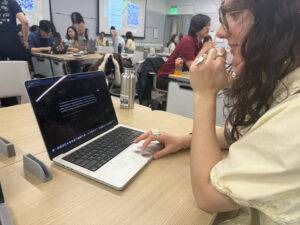

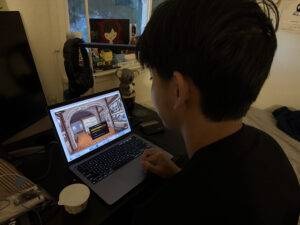
A playtester thinking through a puzzle during an in-class playtest A playtester exploring Remnant on a laptop A playtester exploring Remnant on a laptop at home

solution

I scoped the game to a complete MVP with 3 puzzles, a 5-day time limit, and 3 branching endings, then used each playtest round to remove accidental friction while keeping the puzzles challenging:

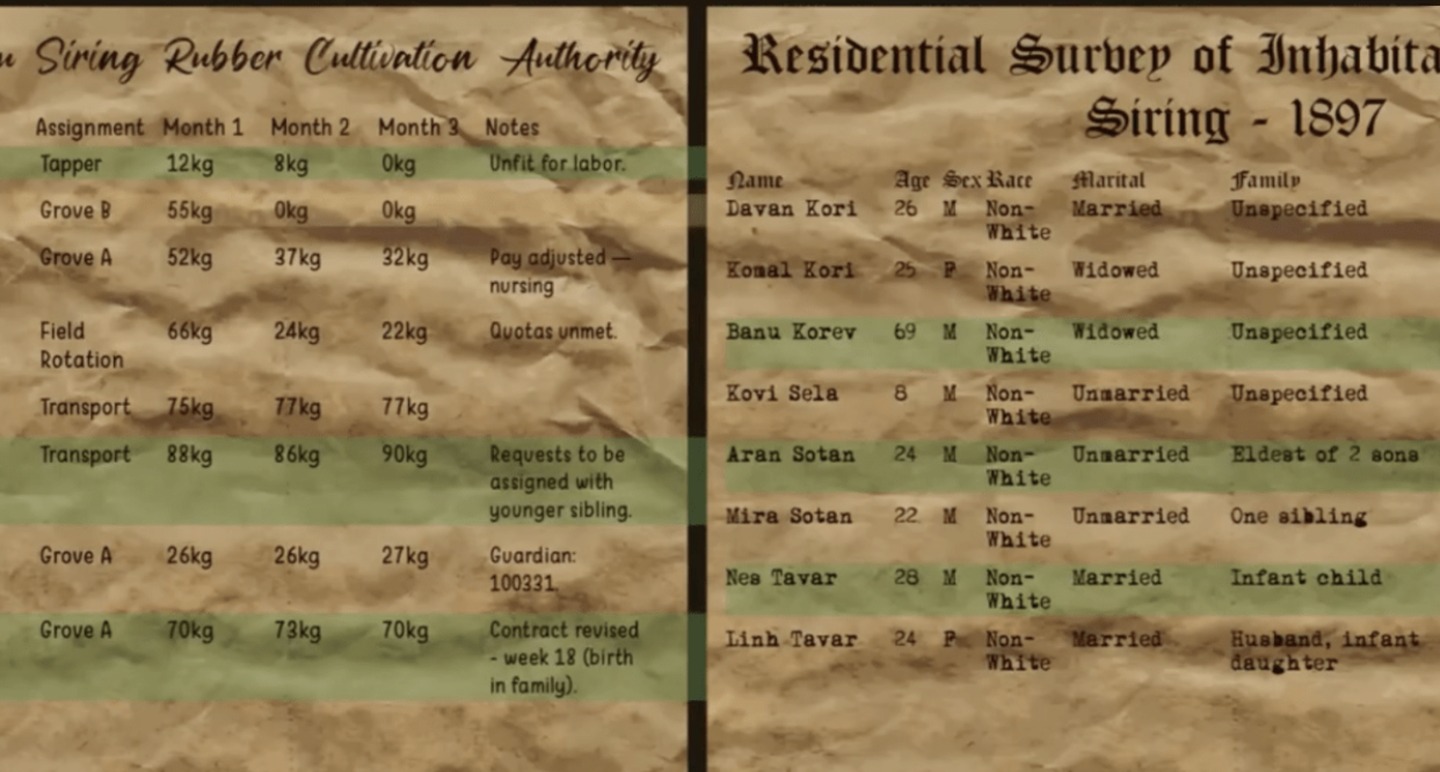
Rebuilt the ledger puzzle

Players now match 8 worker ID numbers to real names one pair at a time, with each correct row turning green and a violin note confirming the match.

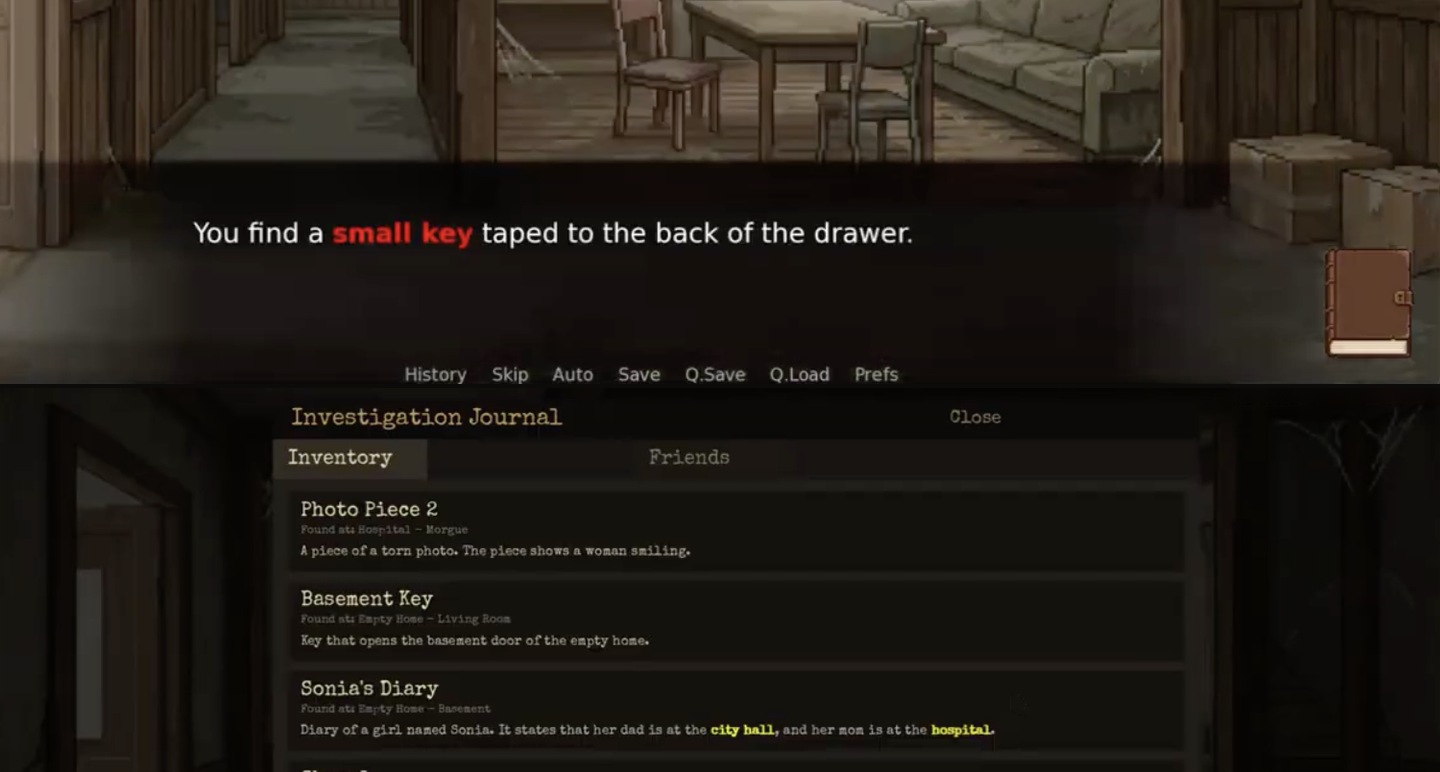
Made clues stand out

Collected items appear in red bold and location hints in yellow bold, while an auto-logging journal records every clue so players don't have to memorize them.

Protected player progress

A confirmation prompt now appears before players leave a location, so a mistaken click no longer costs one of their limited daily visits.

The ledger puzzle: a colonial rubber plantation ledger beside a 1897 census, with correctly matched rows highlighted in green An item pickup shown in red bold dialogue, and the investigation journal listing collected clues with location hints in yellow

impact

By the final playtest, players could solve puzzles on their own and stayed invested in the story through the ending:

Solved unaided in 2-3 minutes

The ledger puzzle went from needing outside guidance to being figured out within seconds, with players reasoning aloud about the workers' lives as they solved it.

No more lost progress

Playtesters who clicked leave by mistake stopped at the confirmation prompt and chose to stay, eliminating accidental progress loss.

back to projects